.png)

1, Pi Mai
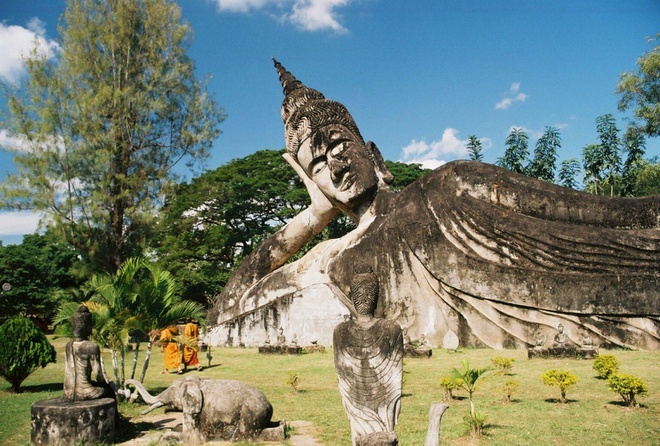
The Lao New Year, also known as Pi Mai or Songkran, is celebrated in Laos from April 14-16. The festival officially lasts for three days, but it usually lasts for a whole week and includes activities. Fun splashing water, where people will be splashed with water and wheat flour by strangers. Bring an umbrella and join the fun. Parades in cities, especially Luang Prabang and Vientiane (to a lesser extent), have people dressed in traditional costumes telling the history and folklore of Laos and Buddhism. Temples and houses were cleaned for the new year, and worshipers practiced Lao rituals. Beauty contests, baci ceremonies and traditional music and dance take place during festivals
2, Boun Bung Fai
Boun Bung Fai's day, or the Lao Missile Festival, varies by region and sometimes by village. This traditional Lao festival takes place in May, June and July. The villagers begged the gods to end the hot season and bring the rains by launching homemade rockets. The winners are those with the highest flying missiles and the brightest fires. The loser was thrown into the mud. Viewers watch the program, listen to the judges comment and participate in eating.
3, Wat Phou
Along with the Champasak Cultural Landscape, the ruins of the Khmer in the 5th century of Wat Phou are included in the second list of Laos' UNESCO World Heritage List. In late January or early February, a delegation from Laos, Cambodia and Thailand came to Wat Phou, meaning 'temple in the mountains'. Boun Wat Phou festivals include boat racing, cockfighting, dancing and, of course, drinking. Immersed in the surrounding nature, the remains of Wat Phou are scattered all over the mountain. Toward the east, the monument has two large reservoirs on either side of a long column, leading toward the mountains. Past the ruins of a palace, up a steep staircase, you will find the cathedral with a modern and extremely sacred Buddhist temple.
4, Boun Khao Phansa
The Boun Khao Phansa Festival is usually held at the temples to open the 3-month retreat of monks and nuns in Laos. With the good meanings of Boun Khao Phansa, many Lao people today also respond. With over 90% of the population following Buddhism, Buddhism plays a very important role in the life of the Lao people. The Boun Khao Phansa Festival is a major Buddhist festival marking the three months of the monastic life of monks in Laos. Boun Khao Phansa in Lao means rainy season. Therefore, the Boun Khao Phansa Festival also coincides with the 3 months of the rainy season in Laos. During this time, monks will not leave the temple, just gather at the temple to chant sutras and cultivate themselves, while the people will go to the temple to worship, worship and pray.
5, Pha That Luang
Boun That Luang takes place in November every year, for three days around the full moon. The stupa in Vientiane is the national symbol of Laos and is said to contain a fragment of the breastbone of Buddha. Thousands of pilgrims gathered at That Luang to make offerings to monks from all over Laos. The procession, party, and a trade show follow. Even if you don't take part in traditional Lao festivals, the stupa is still a sight to behold at any time of the year. Participate in faithful offerings and place flowers, candles and incense in an alternative place or quietly stroll around the spacious yard.
6, the Lunar New Year of the H’mong people
The H'mong people are an ethnic tribe living in Northern Laos, Thailand and Vietnam. Mid-December means the New Year celebration for H'Mong people, who donate their best silver clothes and jewelry. Festive games, singing and dancing and (of course) tons of delicious food are part of the celebration. The Hmong flirting ritual is an important part of the New Year celebration in a game called pob pob, young people throwing cloth balls back and forth to get to know each other and find potential partners.
7, Lao National Day
December 2 is the Lao National Day, a celebration of the Communist Party. Pathet Lao, roughly translated as Lao people, the name of the only political party in the country. On this day in 1975, the monarchy was abolished and the beginning of the People's Democratic Republic. People wear national costumes or government uniforms and attend political meetngs early in the morning.


HANOI TRADE FAIR & TOURISM JSC COMPANY C5 , Lane 193, Trung Kinh str., Cau Giay District, Hanoi C5 , Lane 193, Trung Kinh str., Cau Giay District, Hanoi  +84.243 974 5656 +84.243 974 5656 info@hanoifairtours.com info@hanoifairtours.com |
|
|
JOIN TRAVEL FAIRS WITH US
|
Gallery |
.png) |
 |
 |
 |
 |
Hanoi Fairtours JSC Since 2004- Member of Vietnam Tourism, PATA, ASTA